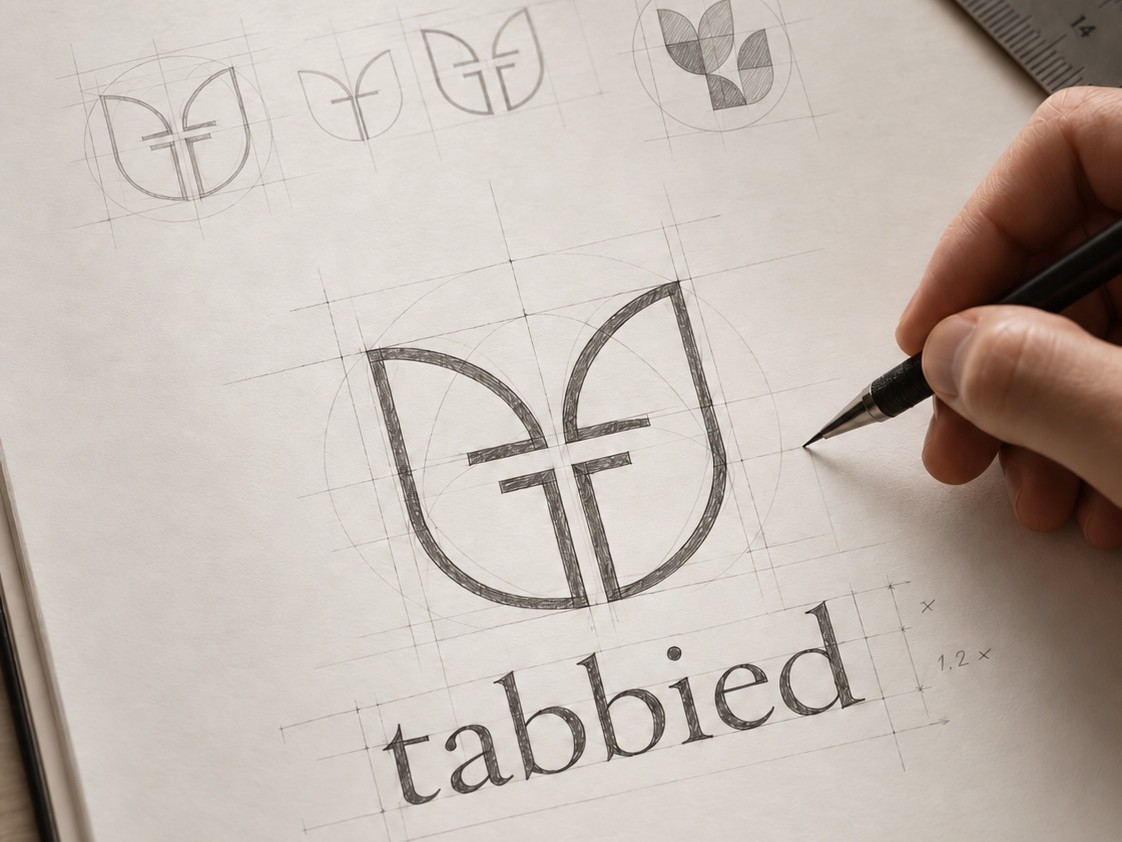
Logos have always been the hardest part of design for me. Hours of moving shapes around, questioning every decision, and pulling my hair out, all to make something that doesn’t feel cringe.
This time, I thought I had help. Between ChatGPT and Claude, surely I could find a direction worth pursuing. Instead, I spent hours explaining what I wanted, getting increasingly questionable results, and eventually designing it myself. Frustrating, but comforting to the designer in me.
It started with a cat
While redesigning tabbied, I kept coming back to our logo: a colorful, geometric cat that was simple, playful, and full of personality. I still liked it, but as we added features like website templates, I wondered how the logo might grow along with the site.
First, why a cat? Tabbied comes from tabby, a cat known for its striped, swirled, or spotted coat. Since the site began as a tool for generating colorful patterns, the connection felt fitting. A patterned cat for a pattern-making tool. Get it?
I wanted to keep that connection, refine the shapes, and work the letter T into the design without losing its personality. I figured AI could help me explore the possibilities.
ChatGPT understood the words. The designs were another story.
I started with ChatGPT. The request was to experiment with geometric shapes, incorporate the letter T, and make the whole thing resemble a cat. Simple enough, right?
Some concepts felt like three unrelated ideas awkwardly pushed together. Others looked like flags for countries that don’t exist. A few made absolutely no sense. They had pieces of what I’d asked for, but nothing felt cohesive or worth refining.
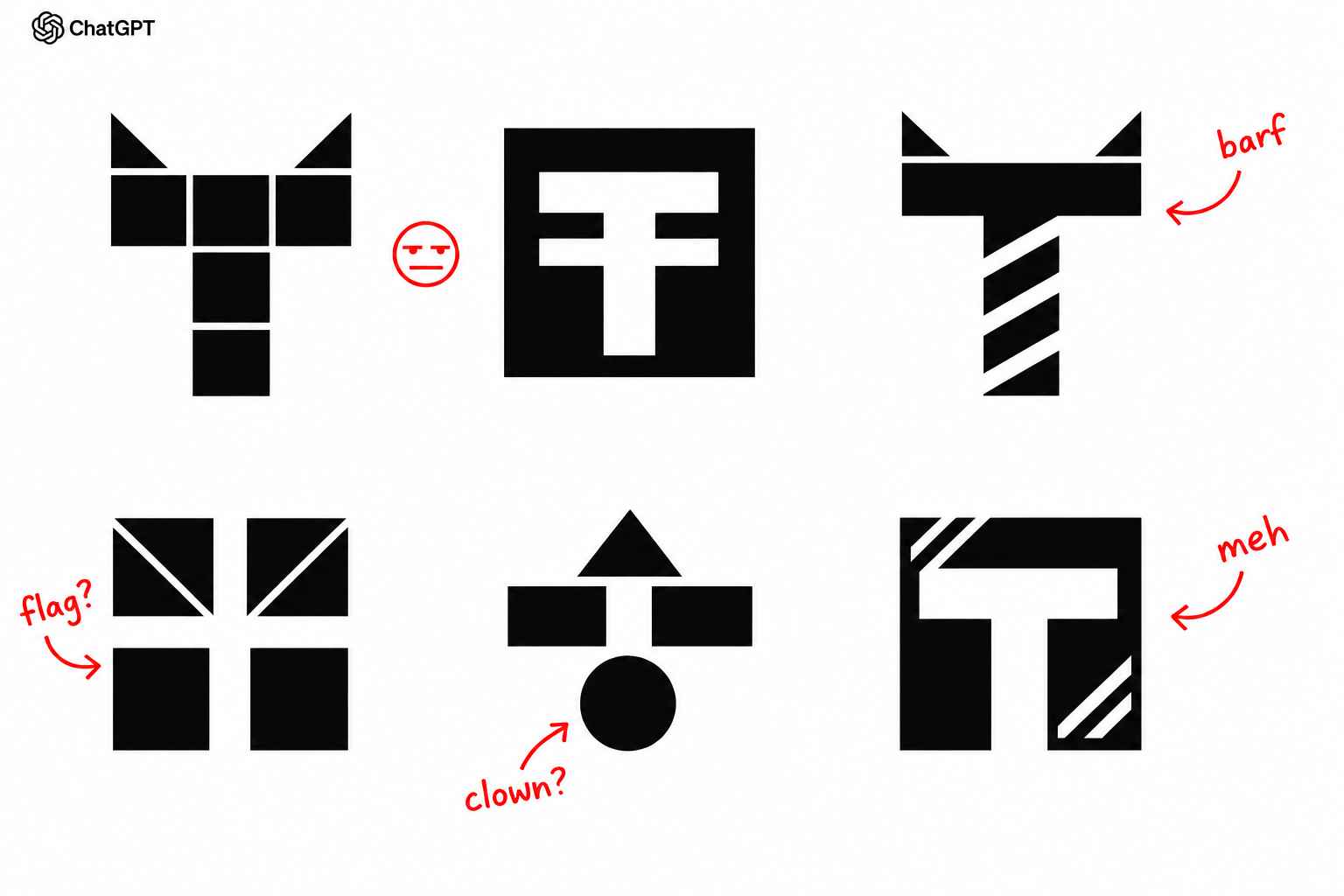 Disappointment 1
I kept adjusting the prompt, hoping clearer instructions would lead to better results. Maybe I needed to explain the geometry differently. Maybe the cat needed to be more subtle. Maybe I was asking for too much at once.
But each attempt gave me another version of the same problem: the elements were there, yet the design wasn’t working. Eventually, I decided to give Claude a shot.
Claude didn’t save the day
By this point, I was questioning my own direction. Maybe forcing a cat and a T into one logo was the problem. So I asked Claude to forget the cat and explore simple geometric shapes that could represent patterns. The results were generic, boring, and almost amateurish. I’d loosened the brief but lost the personality.
Naturally, I went straight back to my cat obsession. I asked for a cat combined with geometric patterns, with one important instruction: “Don’t make it cringe.” Cringe was exactly what I got. Finally, I stripped the request down even further. Just do something clever with the letter T. Anything. More meh.
 Disappointment 2
I’d tried two tools, rewritten the brief, removed constraints, and changed directions. I had plenty of options to look at, but nothing I wanted to use.
That was the frustrating part. I’d seen these tools write code, generate websites, and create beautiful imagery. I expected them to help with one small logo. Yet every round still left me trying to explain what was missing: a sense of balance, personality, or a clever connection that didn’t feel forced. After hours of trying, I stopped prompting.
The answer was hiding in the original
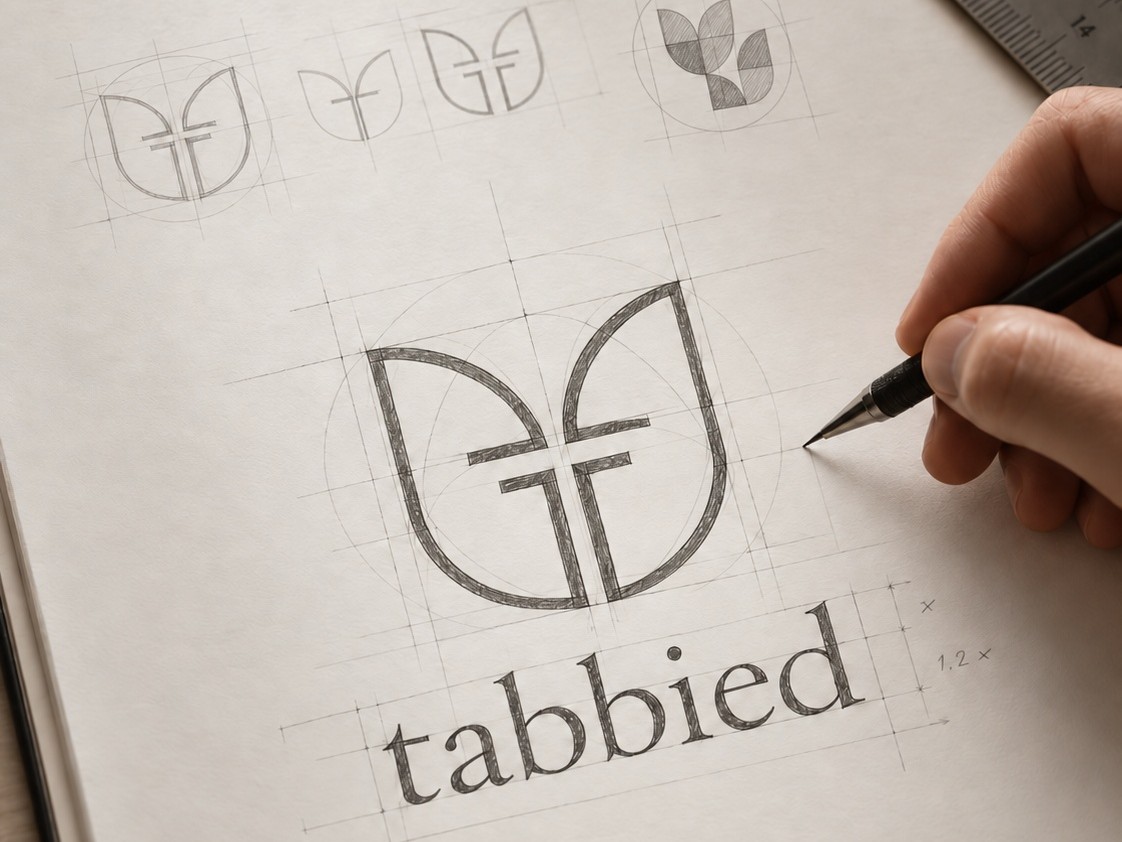 I opened the original logo again and started working with the shapes myself. The more I looked at it, the more I realized it already had much of what I wanted: the geometry, the playfulness, and the subtle resemblance to a cat. It needed refinement, but I still liked the idea underneath it. As I rearranged the shapes, I noticed something I’d overlooked: the T was already hiding inside the cat.
The straight edges of the head naturally framed the letter, while the horizontal elements suggested whiskers. With a few adjustments, the T became clearer and the cat was still there. This was the connection I’d been trying to get from all those prompts. The shapes finally felt like they belonged together.
The final result: trusting my own eye
Neither ChatGPT nor Claude gave me a direction I wanted to pursue. They produced options, but I still had to judge each one, explain why it wasn’t working, and hope the next attempt would get closer. Eventually, that became more exhausting than designing it myself. What finally moved things forward was taking a closer look at the original. I knew which parts felt like Tabbied and could recognize when the changes started to feel right.
That’s the part of design I still struggle to put into a prompt. Taste, intuition, knowing what to keep, and recognizing when an idea feels forced, even if it checks every box. I’m still impressed by what AI can do, but this experience made me a little less worried about it doing everything better than humans. For this logo, ChatGPT and Claude couldn’t get me there. I had to trust my own eye and finish the job.


